
Tangible Wellness | Delivered Anywhere
October 12, 2026
3 Secrets That Encourage Authentic Culture Change
September 20, 20265 Wellness Priorities We’re Watching for 2027
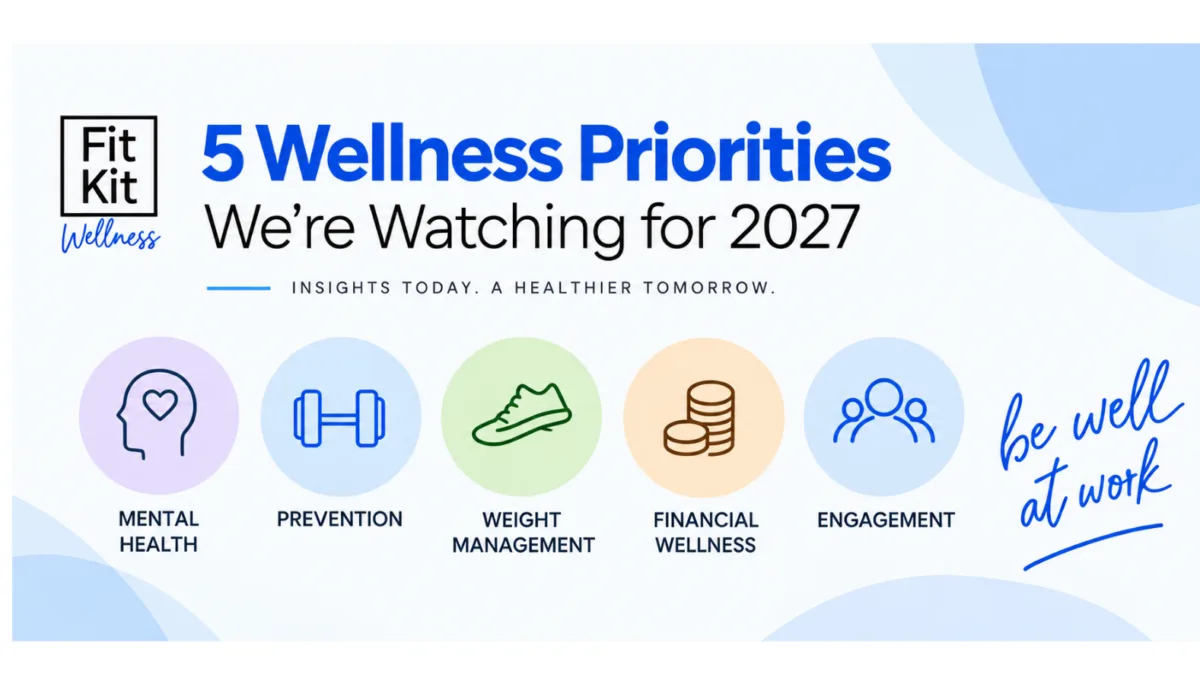
As employers begin shaping their 2027 well-being strategies, workplace wellness continues to evolve. Rising healthcare costs, changing employee needs and a greater focus on engagement are influencing how HR and benefits teams think about their programs and where they invest their wellness dollars.
From mental and financial well-being to prevention and more personalized support, here are five trends we’re watching as employers plan for the year ahead.
1. Mental Health & Stress Remain Front and Center
Mental health continues to be a major workplace wellness priority, and employees are still feeling the strain. Mercer’s Health on Demand research found that more than one in three U.S. employees feels stressed in everyday life and most days at work, while 41% say mental health coverage is valuable to them.
As we move toward 2027, the conversation is expanding beyond access to mental health care to include stress management, resilience, mindfulness and everyday tools that can help employees better manage their overall well-being.
2. Prevention Is Moving Beyond the Annual Screening
Across the benefits industry, employers are placing greater emphasis on prevention and proactive health management as healthcare costs continue to rise.
But prevention doesn’t have to begin and end with an annual biometric screening. Nutrition, movement, sleep, preventive care and other everyday behaviors can all play a role in supporting long-term health.
3. Weight Management Is Becoming a Broader Wellness Conversation
Few areas of employee health have changed as rapidly as weight management. GLP-1 medications have transformed treatment options while also creating new questions around cost, access and long-term support.
Nearly half of large U.S. employers, 49%, covered GLP-1 medications for weight loss in 2025, according to Mercer. At the same time, employers are taking a closer look at costs and how these medications fit into broader weight-management strategies.
4. Financial Wellness Is Becoming Part of the Bigger Well-Being Picture
Financial well-being continues to move closer to the center of employers’ overall wellness strategies. Financial stress can affect mental health, physical well-being and even how employees engage at work, making it increasingly difficult to separate financial health from overall health.
For employers, financial wellness can take many forms, from budgeting and emergency savings to retirement planning, financial education and helping employees better understand and use the benefits already available to them.
It’s an area we’re excited about at FitKit Wellness, too. Our team is working behind the scenes on a new Financial Wellness Kit designed to make financial well-being education more approachable and engaging. We look forward to debuting it soon.
5. Engagement May Matter Just as Much as the Benefit Itself
Employers have invested heavily in health and well-being benefits, but offering a great resource doesn’t necessarily mean employees know about it or use it.
A 2026 Castlight Health survey of 2,000 U.S. employees found that only about one-third clearly understand the health and well-being benefits available to them or use those benefits regularly. More than a third said that when a new health need arises, they look for their own solution first rather than checking what their employer already offers.
That makes engagement one of the biggest opportunities heading into 2027.
At FitKit Wellness, we believe tangible wellness can play a role in making those connections. Useful tools employees can see, touch and use, paired with customized educational materials and QR codes, can help bring wellness initiatives to life while directing employees back to the benefits and resources available to them.
Looking Ahead
The common thread across these trends is a shift toward wellness that is more holistic, more intentional and more focused on engagement.
As employers plan for 2027, the opportunity may not simply be to offer more. It may be to find better ways to help employees discover, understand and engage with the resources already available to them.
Sources & Further Reading
Mercer, Health on Demand 2025
Mercer, National Survey of Employer-Sponsored Health Plans
Castlight Health, 2026 Employer Health Benefits Experience Survey